
Best WordPress Settings for Hostinger Users
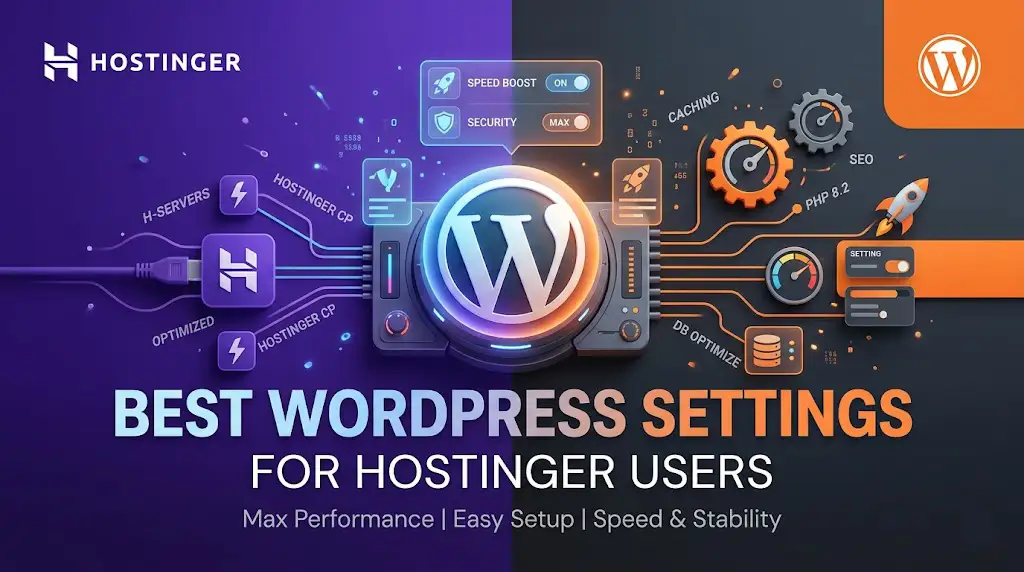
Default configurations often lead to high server resource usage and slower speeds. Aligning your platform core with your hosting architecture unlocks peak efficiency.
Core Alignment
Tuning background system cycles to sync with server PHP behaviors and database processing pipelines.
Asset Delivery
Configuring optimal script behavior parameters to lower dashboard loading lag and front-end response times.
To implement the best WordPress settings for Hostinger users, administrators must look past simple configuration methods. Over this detailed 10-part optimization sequence, we will address crucial adjustments ranging from internal caching mechanics to fine-tuning database schemas.
Launch Your Next Optimized Site Safely
Testing advanced optimization layers requires a reliable development environment built on scalable infrastructure plans. You can establish your testing ground at a reduced price by redeeming the deepest current discounts via our verified Hostinger Coupons matrix before completing setup.
🚀 Let’s proceed to the technical settings. Part 2: Permalinks and Core URL Structure Enhancements…
Permalinks and Core URL Structure Enhancements
To implement the best WordPress settings for Hostinger users, we must begin with the core URL rewrite rules. Default WordPress installations sometimes carry query strings that force the database to process unnecessary execution layers instead of reading optimized server structures cleanly.
🛠️ Optimal Permalink Setup Sequence
Adjusting your permalink configuration directly changes how the server interacts with LiteSpeed rewrite structures to deliver fast asset routing:
- Post Name Selection: Always navigate to Settings > Permalinks and select Post Name. This removes deep nesting folders, lowering your server’s lookup index parsing intervals.
- Eliminating .htaccess Bloat: Clean permalinks help avoid unoptimized or broken rewrite code patterns inside your root directories, ensuring fast script executions.
- SEO Semantic Synchronization: Clean URL handles pass parameters efficiently through Hostinger’s edge network layer, increasing your global crawling and indexing rates.
The Technical Link to Server Latency
When your permalink structure includes dates or numerical IDs, the server has to parse multiple database tables just to identify the requested page path. Shifting your layout to a clean semantic post name enables your server to index requests rapidly, allowing the platform’s NVMe drive layers to pull up matching content files without processing delay.
Launch Advanced Optimizations For Less
Building complex digital projects with top-tier optimization layouts doesn’t require a premium monthly infrastructure budget. Secure our deepest active price drops by picking up verified coupons from our active Hostinger Coupons page before checkout.
⚡ Moving to cache framework deployments. Part 3: LiteSpeed Cache Plugin Integration and Object Caching…
LiteSpeed Cache Plugin Integration and Object Caching
To unlock the best WordPress settings for Hostinger users, integrating the **LiteSpeed Cache (LSCWP)** plugin is an absolute necessity. Because Hostinger utilizes enterprise-grade LiteSpeed Web Servers rather than standard Apache or Nginx, traditional caching plugins cannot communicate directly with the server’s native architecture.
Server-Level Cache Control
Enabling the cache engine forces the host hardware to store fully rendered pages, eliminating repetitive dynamic PHP processing tasks completely.
Object Cache Deployment
Activating Redis or Memcached within your hPanel dashboard channels recurrent database query results directly through system memory structures.
Configuring the Cache Engine Cleanly
Navigate to the plugin’s *Cache* settings panel and ensure that **Enable Cache** is toggled ON. Next, head over to the *Object Cache* sub-section; if your hosting tier includes database RAM optimization features, activating this setting cuts down backend operational lag. This ensures that complicated admin dashboard menus load instantly without consuming standard processor limits.
Boost Site Performance For Less Budget
Deploying optimized setups with advanced hardware-level caching engines doesn’t require high-tier package prices. Lower your infrastructure development expenses by applying verified markdown codes found on our active Hostinger Coupons hub before check-out.
📉 Advancing to asset optimization rules. Part 4: CSS, JS Minification & File Optimization Standards…
CSS, JS Minification & File Optimization Standards
To implement the best WordPress settings for Hostinger users, we must carefully look at static asset delivery. Unoptimized CSS stylesheets and JavaScript files can trigger page-render blockages, destroying your mobile PageSpeed scores and shifting your Layout Cumulative metrics.
⚙️ LiteSpeed File Optimization Setup
Inside your *LiteSpeed Cache > Page Optimization* panel, apply these key settings to trim code weight and resolve asset loading lag cleanly:
- CSS Minify & Combine: Toggle CSS Minify ON to strip white spaces. Only enable CSS Combine if your total stylesheet payload counts are low, preventing large code blockages.
- JS Defer & Delay: Turn JS Defer ON. This setting forces non-critical scripts to execute only after the structural HTML has completely rendered on screen.
- Font Display Optimization: Change your configuration setting to Swap. This lets the browser load system fonts instantly while download operations pull up premium custom icons.
Avoiding Broken Script Layout Layouts
Aggressive code combinations can sometimes break interactive front-end elements like responsive menus or slider elements. If you notice structural issues, use the *Tuning* submenu settings to exclude essential theme scripts from the optimization flow. This keeps your visitor features interactive while sustaining fast speeds.
Launch Scalable Layout Developments Cheaply
Building fast, lightweight sites doesn’t require separate platform optimization subscription add-ons. Reduce your monthly platform expenditures by unlocking verified price drops via our active Hostinger Coupons matrix before deploying.
🖼️ Transitioning to graphic delivery structures. Part 5: Image Media Tuning & WebP Compression Frameworks…
Image Media Tuning & WebP Compression Frameworks
To implement the best WordPress settings for Hostinger users, optimizing your media library is vital. Large, uncompressed images are the most common cause of high page weight, which directly delays your initial content paint and increases mobile data usage.
WebP Image Replacement
Enabling automated server-side image optimization converts heavy JPG or PNG graphics into next-generation WebP formats instantly.
Lazy Loading Delivery
Configuring smart loading policies ensures below-the-fold media assets only download as the visitor scrolls down the page.
Streamlining Media Workflows via LSCache
Instead of loading down your backend configuration with slow, third-party compression plugins, navigate to *LiteSpeed Cache > Media Optimization*. Toggle **Lazy Load Images** ON and configure the automated optimization queue. This allows your server to generate lightweight image copies in the background without draining your core hosting account processing limits.
Optimize Media Infrastructure For Less Budget
Building media-rich websites that load instantly globally doesn’t require high-tier package expenses. Minimize your ongoing platform costs by claiming verified active discounts through our Hostinger Coupons matrix before deploying.
💾 Moving to database maintenance adjustments. Part 6: Database Cleaning and Revision Control Strategies…
Database Cleaning and Revision Control Strategies
To implement the best WordPress settings for Hostinger users, maintaining a lightweight database dashboard index is highly critical. Over time, automatic post revisions, spam comments, and transient options accumulate within your tables, creating data overhead that slows down server NVMe query processing times.
💾 Database Optimization Protocols
You can utilize built-in server features and clean system setups to prevent database execution delays:
- Limiting Post Revisions: Add
define('WP_POST_REVISIONS', 5);to your wp-config.php file to stop your posts from generating infinite, redundant database entry clones. - LSCache Database Tooling: Navigate to LiteSpeed Cache > Database and run a comprehensive sweep to safely clear transient tables and empty trash indices.
- Optimizing Table Structures: Execute table optimization via the dashboard menu monthly to refresh database structures and secure immediate query routing gains.
Eliminating Slow Backend Dashboard Responses
When your database grows too large, checking orders or updating blog entries in your WordPress admin menu can become sluggish. Keeping your database metadata clean allows the platform’s object caching mechanisms to recall active operational rows instantly, preserving low server processing metrics even under heavy loads.
Secure Highly Responsive Servers For Less
Running data-heavy dynamic portals without lag doesn’t require separate platform optimization packages. Reduce your overall administrative costs by picking up verified markdown codes via our active Hostinger Coupons matrix before completing check-out.
🔒 Moving to system layer parameters. Part 7: Heartbeat API Management and Resource Throttling…
Heartbeat API Management and Resource Throttling
To implement the best WordPress settings for Hostinger users, managing background resource consumption is absolutely critical. The WordPress Heartbeat API provides an ongoing communication channel between your browser and the server, which can trigger high CPU usage spikes if left unmanaged on shared hosting tiers.
Controlling Server Polling
Modifying the pulse frequency slows down automatic execution calls, protecting your server resources from continuous backend lookups.
LSCache Control Layer
The internal dashboard provides dedicated tools to adjust or completely disable individual operational requests without adding separate code snippets.
Optimizing Background Execution Tasks
Navigate to *LiteSpeed Cache > Toolbox > Heartbeat*. Toggle the settings to **Modify Heartbeat** for your admin backend, post editor, and frontend locations. Changing the server polling interval from the default 15 seconds up to 120 seconds prevents repetitive ajax execution requests from stacking up when multiple tabs are left open in your browser dashboard.
Minimize Platform Operational Expenditures
Maximizing infrastructure capability through fine-tuned asset profiles allows your sites to thrive on affordable entry plans. Lock in deeper active price markdowns across packages by activating verified promo codes via our Hostinger Coupons matrix before finalized check-out.
🛡️ Transitioning to system communication layers. Part 8: XML-RPC Management and Script Handling Security Protocols…
XML-RPC Management and Script Handling Security Protocols
To implement the best WordPress settings for Hostinger users, you must disable insecure legacy system connection protocols. The old **XML-RPC** API framework remains active by default in core installations, leaving websites vulnerable to automated brute-force attempts and massive DDoS amplified script exploits.
🛡️ Hardening Server Rewrite Parameters
Instead of adding bulky, slow security plugins that continuously scan your file systems, you can stop bad traffic directly at the server level:
- Disabling XML-RPC Access: Add custom rules to your root
.htaccessfile to block incoming requests toxmlrpc.phpcompletely. This drops malicious connections before they can even reach WordPress. - Restricting REST API Access: Set up your system to block unauthorized REST API lookup requests, preventing bot networks from scraping your team’s usernames.
- Mitigating Resource Exploitation: Blocking these old, unneeded connection methods prevents sudden CPU spike loops, keeping your shared server environment stable.
Protecting Dynamic Processing Limits
When an exploit bot targets your xmlrpc.php file, it sends hundreds of rapid parallel requests to crack passwords. Even if the logins fail, your hosting server still has to spin up heavy PHP database connections for each attempt. Turning off this outdated access point allows your host’s integrated firewall to block threats instantly, keeping your resources free for actual human visitors.
Secure Heavily Protected Web Services Cheaply
Building secure, fast websites doesn’t require high premium infrastructure maintenance retainers. Keep your operational overhead low by unlocking deep, verified price reductions via our active Hostinger Coupons directory before checkout.
⚙️ Shifting to server-side resource tuning. Part 9: Cron Job Offloading and PHP Memory Limit Alignments…
Cron Job Offloading and PHP Memory Limit Alignments
To implement the best WordPress settings for Hostinger users, we must handle how background system automation executes. By default, the native WordPress Cron triggers every single time a visitor loads a page on your site, which can cause severe performance drops on traffic-heavy portals.
True Server-Side Cron
Disabling virtual automation execution routines stops background tasks from loading during live visitor browsing sessions.
hPanel Memory Toggling
Increasing internal script processing limits prevents complex code structures from running into memory timeout barriers.
Setting Up a Stable Background Automation Loop
Open your wp-config.php file and insert define('DISABLE_WP_CRON', true);. Then, log into your hPanel dashboard, navigate to **Advanced > Cron Jobs**, and create a real system cron entry that executes wp-cron.php every 30 minutes instead. Next, head into your dashboard **PHP Configurations**, go to the Options tab, and make sure your memory_limit is bumped up to 512M. This gives your site ample breathing room to execute automation smoothly without exhausting server capacity.
Access High Performance Server Infrastructure Affordably
Unlocking flexible memory allocations and advanced automation tools doesn’t require a costly corporate dedicated plan. Secure heavily optimized development spaces at competitive rates by using verified active discounts from our Hostinger Coupons matrix before finalizing checkout.
📊 Moving to the final architectural roadmap. Part 10: Complete Configuration Checklist & Optimization Wrap-Up…
Complete Configuration Checklist & Optimization Wrap-Up
Aligning your web software configuration with underlying host hardware profiles eliminates speed drops cleanly. Implementing the best WordPress settings for Hostinger users moves your platform away from resource-heavy defaults, unlocking top-tier loading speeds and high architecture stability.
📋 Final Optimization Master Checklist
Verify that your digital asset setups match this comprehensive configuration layout before completing deployment:
- Core Environment: Selected *Post Name* permalinks and scaled php memory thresholds up to 512M within hPanel.
- Cache Infrastructure: Active *LiteSpeed Cache* system configuration paired with enabled Object Cache memory tiers.
- Asset Controls: Active CSS/JS script delay filters running alongside background WebP graphic conversion pipelines.
- Automation Architecture: Virtual wp-cron configurations turned off and offloaded onto real server system time-interval cron tables.
📌 Optimization Summary & FAQ
Why are default WordPress settings slow on modern host arrays?
Standard WordPress configurations are built to run on almost any hosting platform, meaning they don’t take advantage of high-speed server technologies like LiteSpeed caching or NVMe storage. Customizing your internal script handling rules allows your software layer to communicate directly with your hosting hardware.
Will choosing the Post Name permalink design drop my database lookup latency?
Yes. Eliminating deep date directories or complex numerical query strings prevents your host from sorting through cluttered table branches, allowing data packages to route straight to your users.
How does setting up a true server cron job save host processing limits?
The default virtual cron script fires on every single page load, creating massive resource spikes during traffic surges. Offloading this process into your hPanel cron manager schedules backend automation at fixed intervals, keeping your site fast and stable for live visitors.
Can aggressive asset minification settings break layout designs?
Yes. Combining JavaScript files can sometimes disrupt interactive design elements like mobile drop-downs. If structural errors pop up, use your optimization plugin’s tuning rules to exclude your theme’s primary scripts from the script delay queue.
Launch Fast, Fully Tuned Website Projects
Deploying responsive digital portals doesn’t require high-tier enterprise infrastructure expenses. Lower your recurring host investments by activating verified active discounts through our Hostinger Coupons matrix before deploying your next optimized installation.